
There comes a stage in almost every serious railway examination journey where preparation begins to feel repetitive despite continuous effort. An aspirant may already be studying regularly for RRB NTPC, Group D, technical examinations, or other railway recruitment pathways, may be solving questions daily, revising formulas, watching strategy content, and attempting mock tests consistently, yet performance often remains unstable. Scores fluctuate. Accuracy breaks under pressure. Time management weakens unexpectedly. Revision becomes scattered. Confidence rises and falls depending on temporary mock test performance rather than long-term preparation stability. At this stage, many aspirants incorrectly assume that they simply need more study hours, more practice questions, or additional motivation. In reality, however, the deeper issue is usually structural—the absence of a complete railway preparation system capable of converting effort into measurable and repeatable performance.
Railway examinations are not designed merely to test theoretical understanding. They are operational performance examinations where speed, accuracy, decision-making, consistency, and execution under time pressure become equally important. An aspirant may know concepts very well and still fail to convert preparation into marks because railway examinations reward structured execution, not scattered effort. The difference between average and high-performing candidates is often not intelligence alone, but the ability to operate inside a disciplined preparation system where planning, learning, revision, mock testing, speed optimization, and exam strategy work together in alignment.
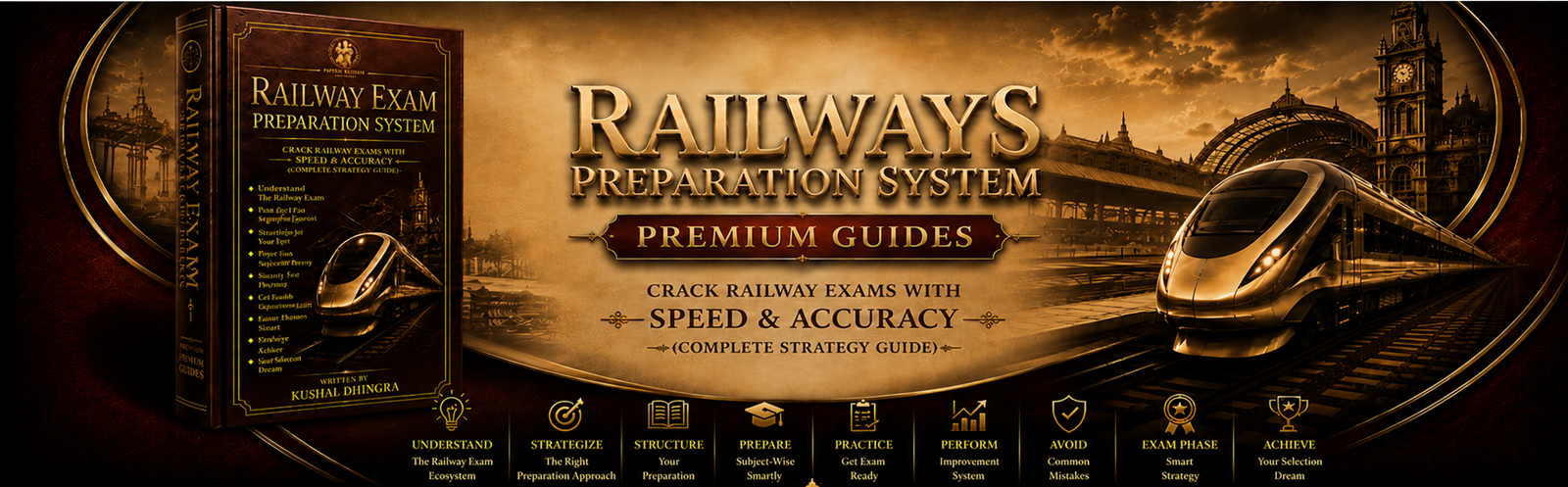
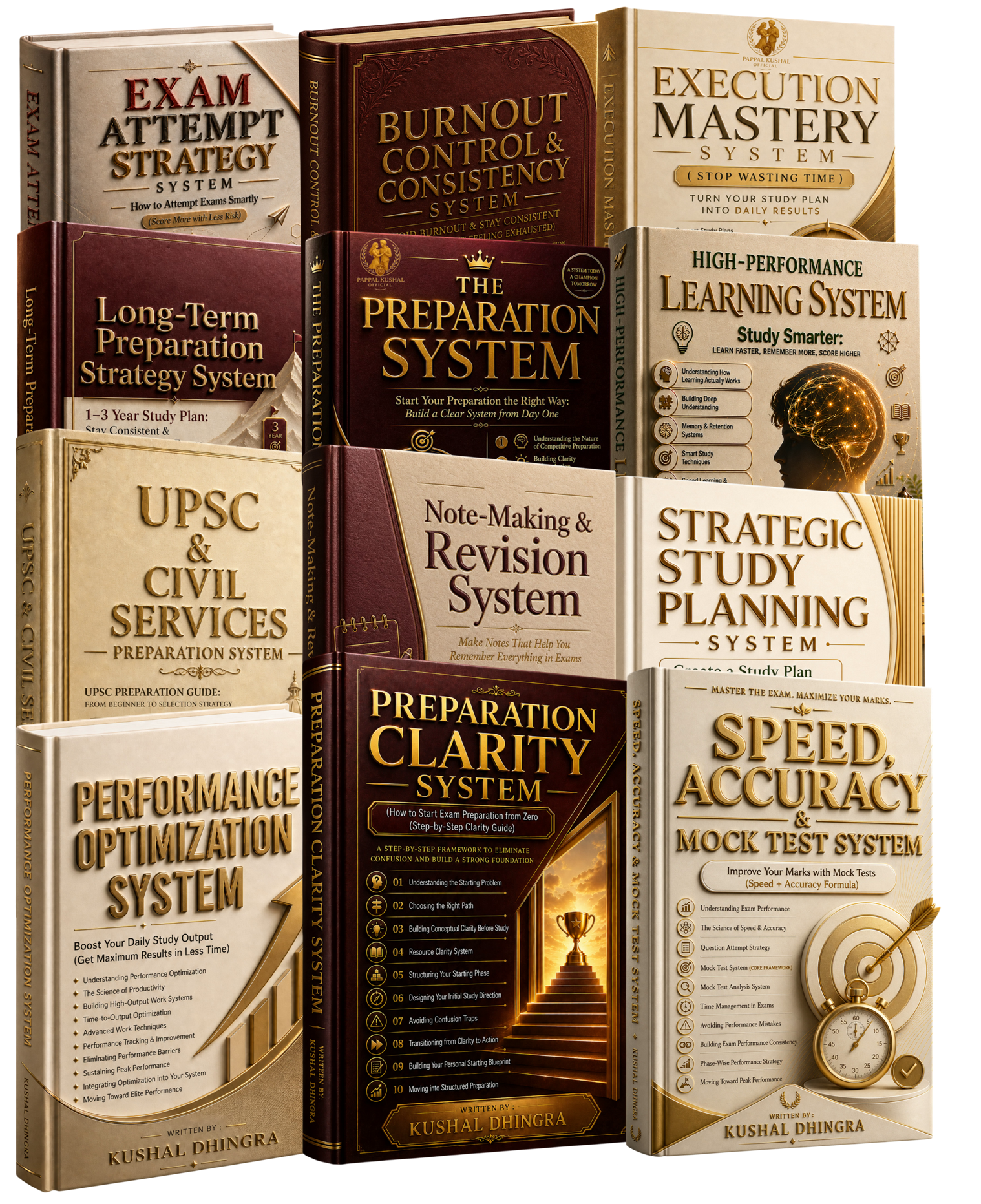
The Railway Premium Guides Bundle has been designed specifically to solve this problem. It is not a random collection of motivational advice or isolated exam tips. It is a complete railway preparation architecture where every included system addresses a specific breakdown point repeatedly observed across real railway aspirants. Each guide functions independently, yet together they form an integrated ecosystem designed to improve execution quality, strengthen accuracy, stabilize consistency, optimize performance, and convert preparation into actual competitive readiness.
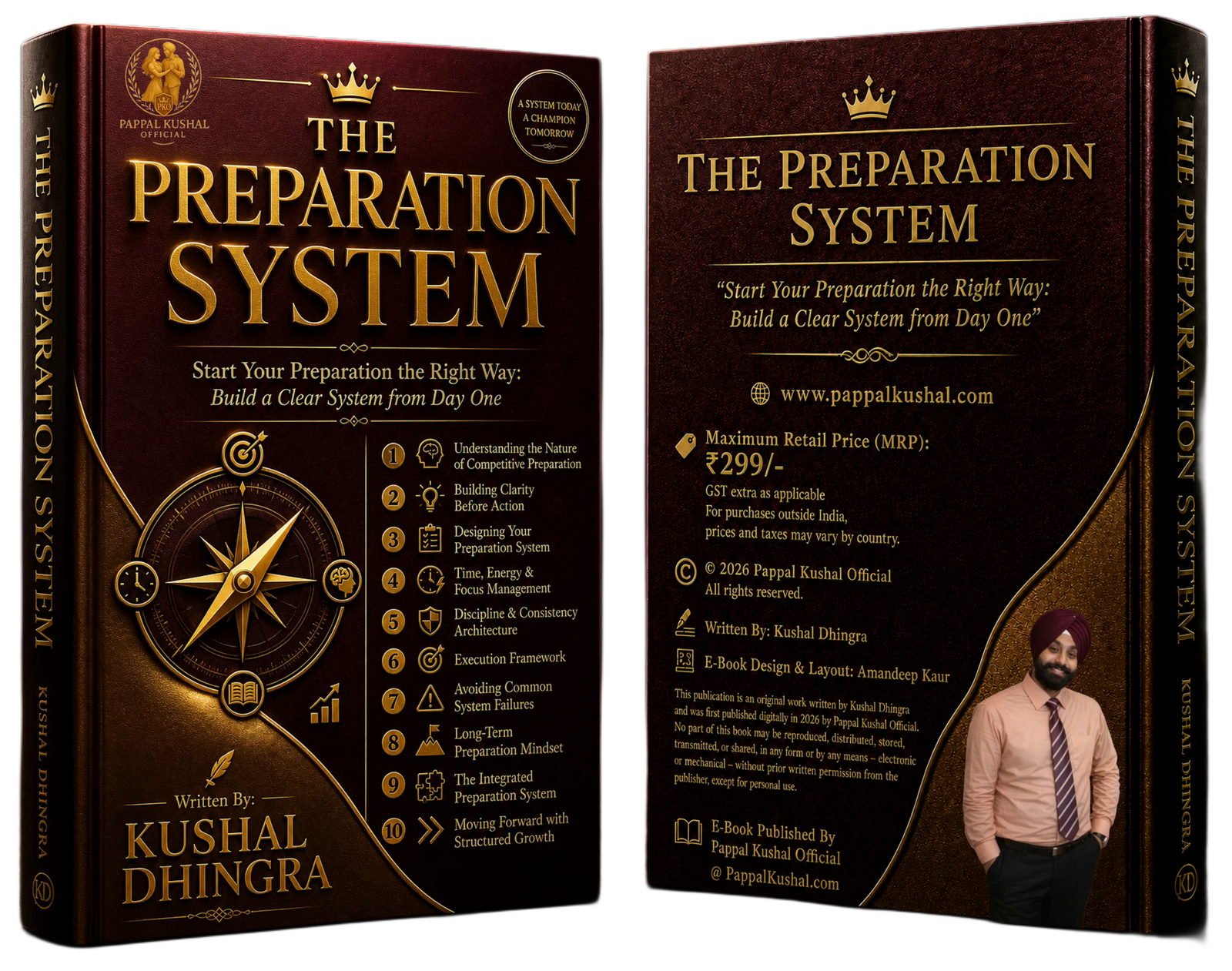
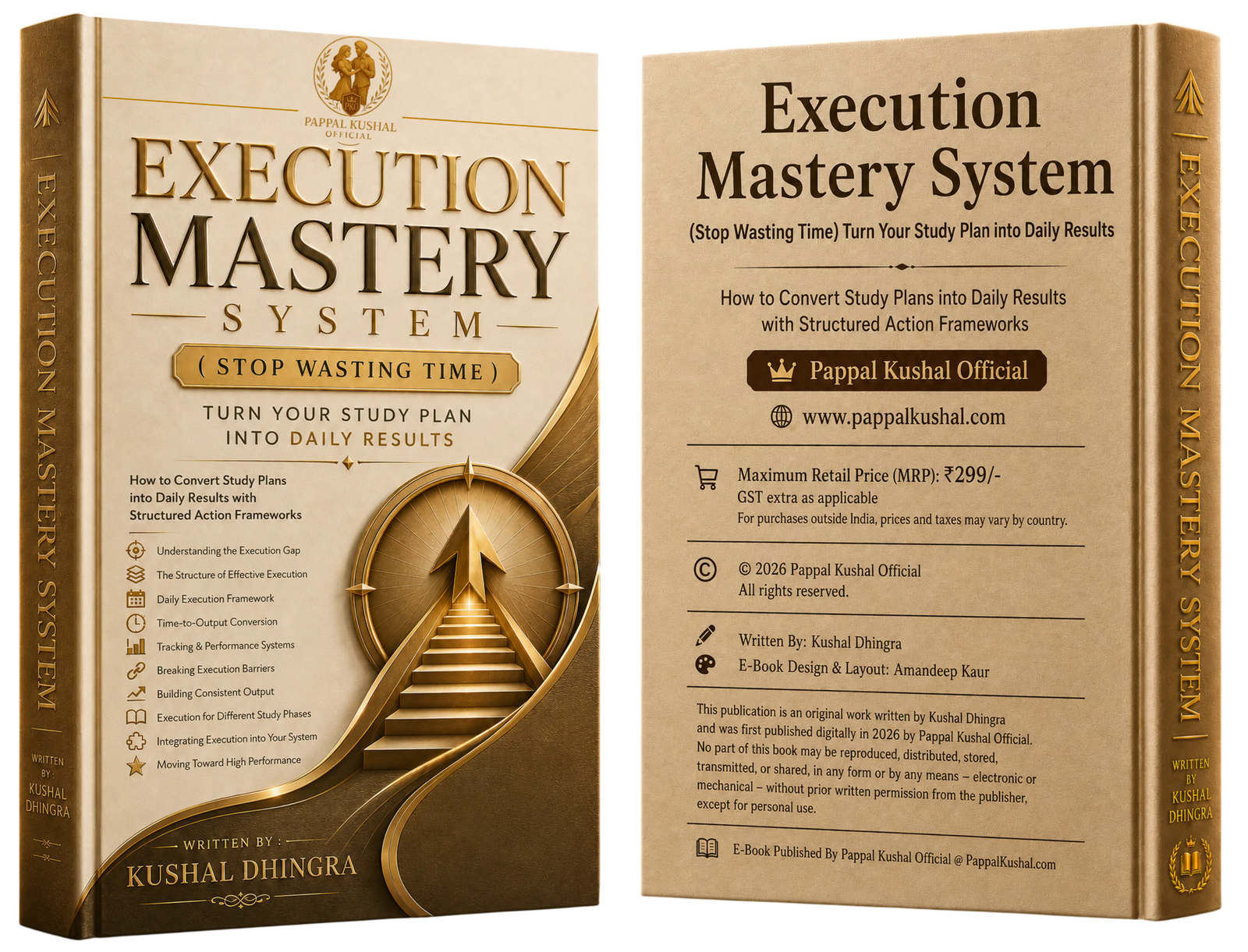
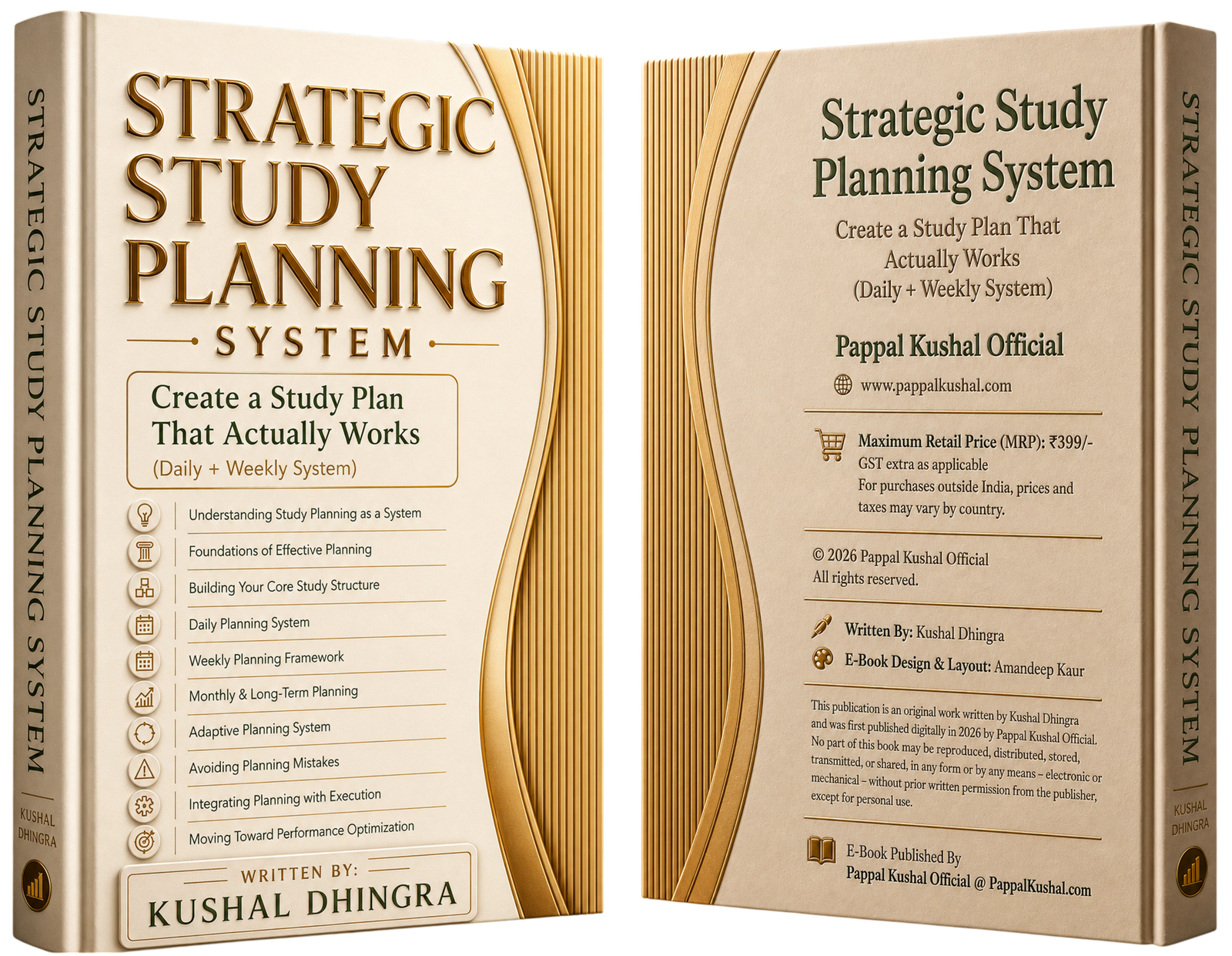
The Preparation System establishes the foundational structure required to transform scattered study patterns into organized preparation systems where every stage operates with clarity and measurable direction. Execution Mastery System then bridges one of the biggest hidden gaps in railway preparation—the gap between planning and real output—ensuring that preparation is converted into daily measurable execution rather than endless planning without productive completion. Strategic Study Planning System organizes large syllabi into manageable daily, weekly, and long-term structures capable of balancing quantitative aptitude, reasoning, general awareness, revision, and practice without overload or confusion.
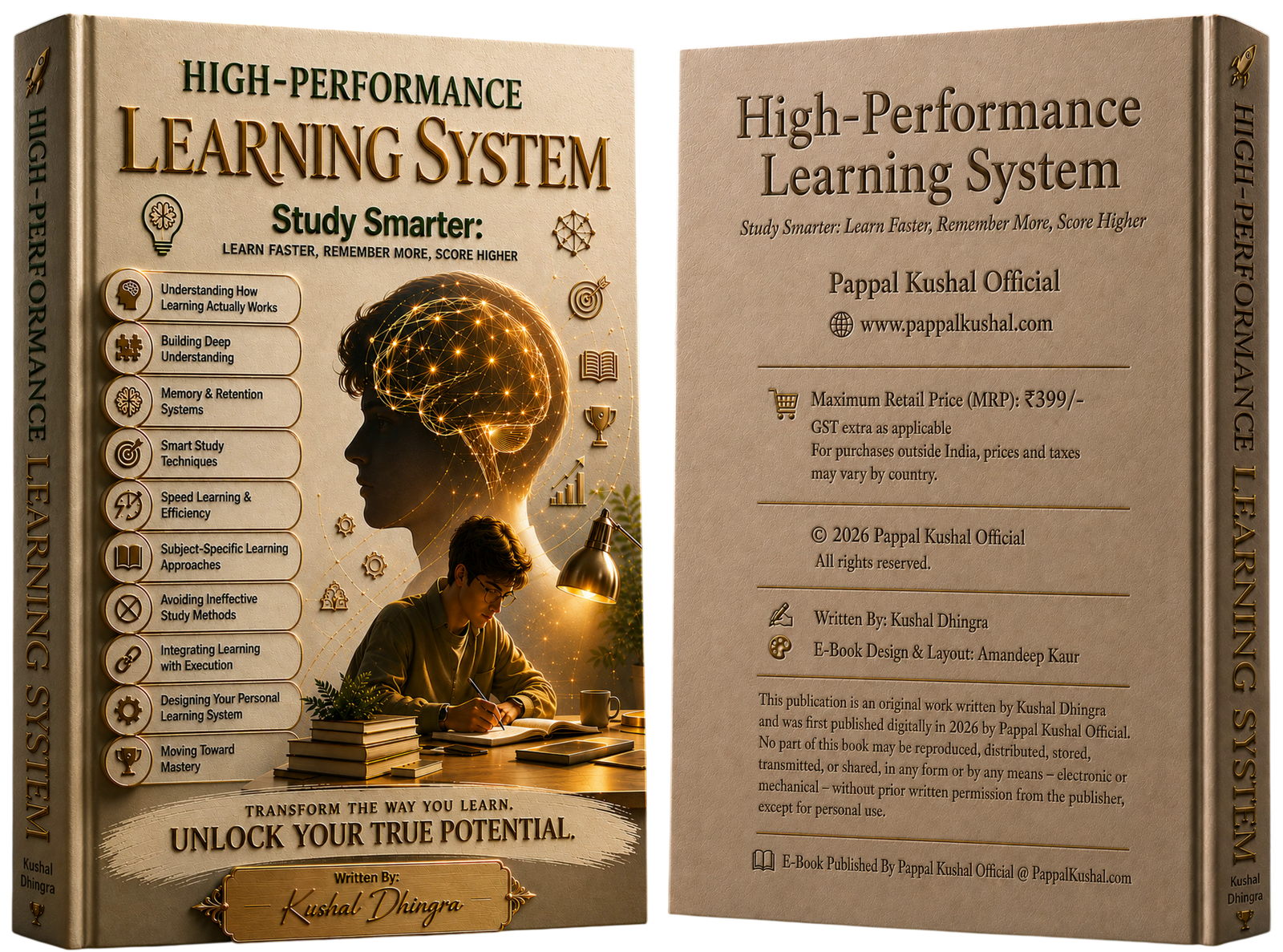
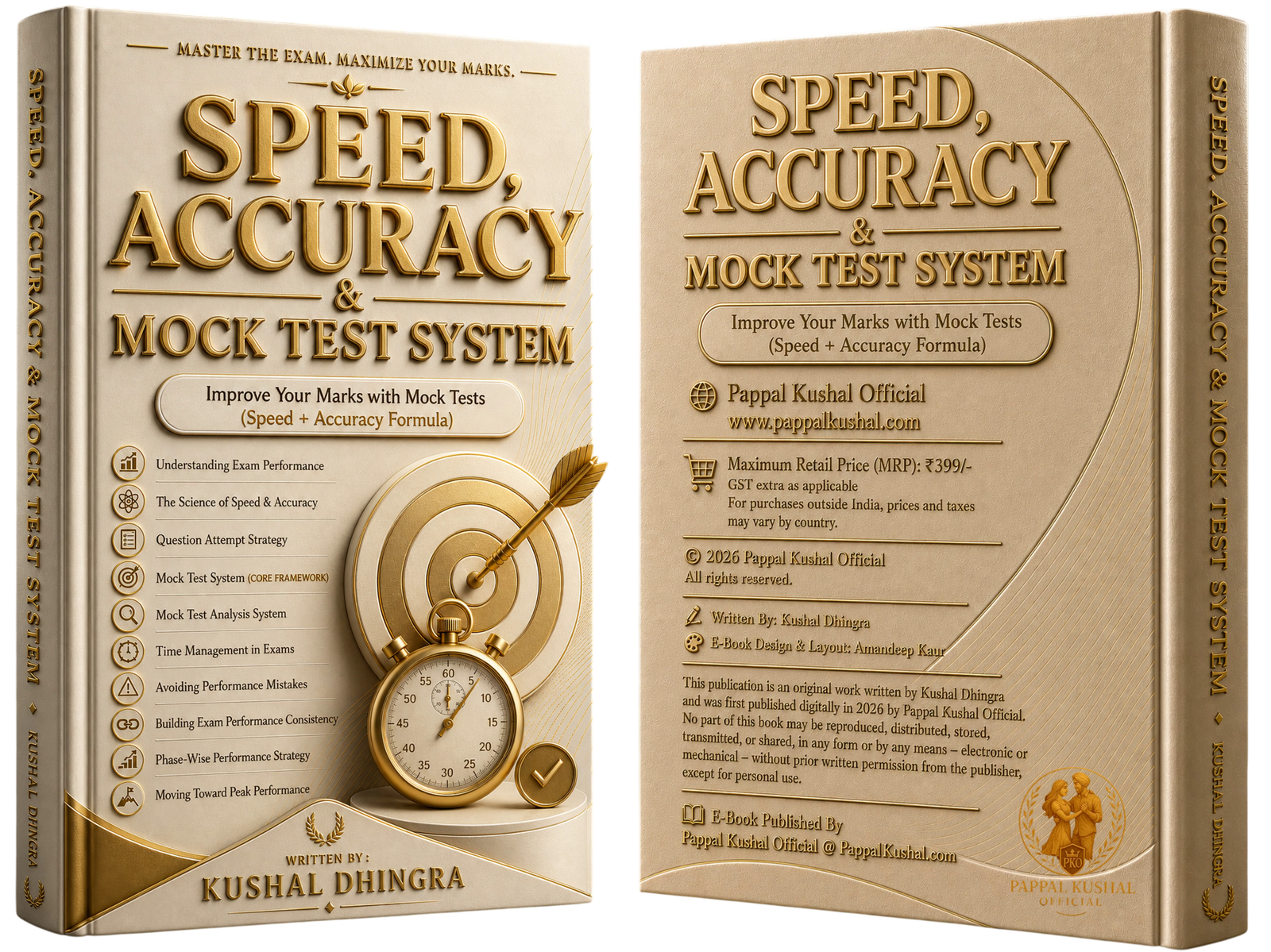
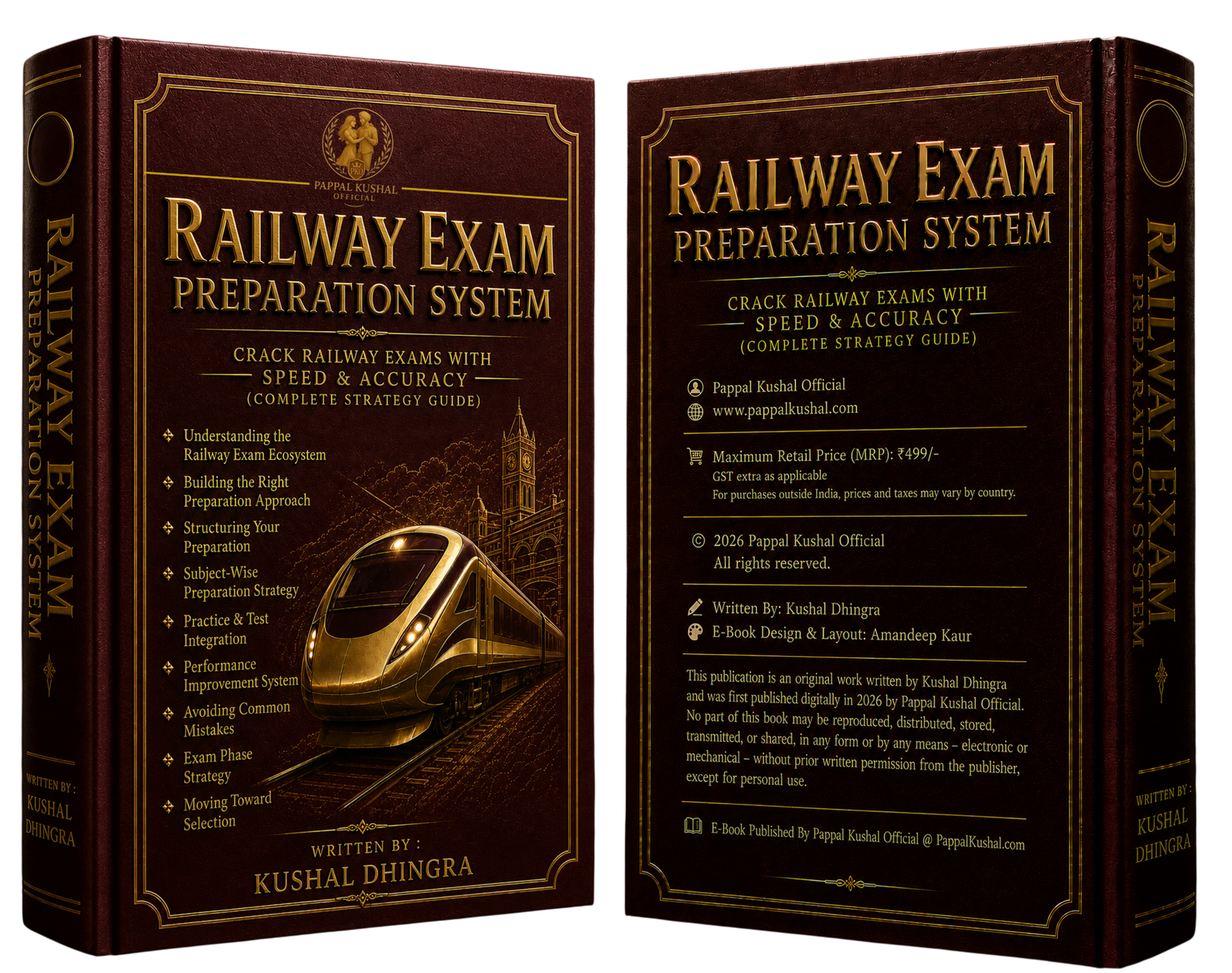
High-Performance Learning System improves learning efficiency itself, helping aspirants understand faster, retain longer, and process information with greater clarity under exam pressure. Speed, Accuracy & Mock Test System directly addresses one of the most critical components of railway examinations—performance under time constraints—by improving question selection, mock analysis, time management, calculation efficiency, and accuracy stabilization. Railway Exam Preparation System then provides the exam-specific operational strategy required for RRB-oriented competitive environments, including subject prioritization, speed development, practice integration, and performance improvement systems.
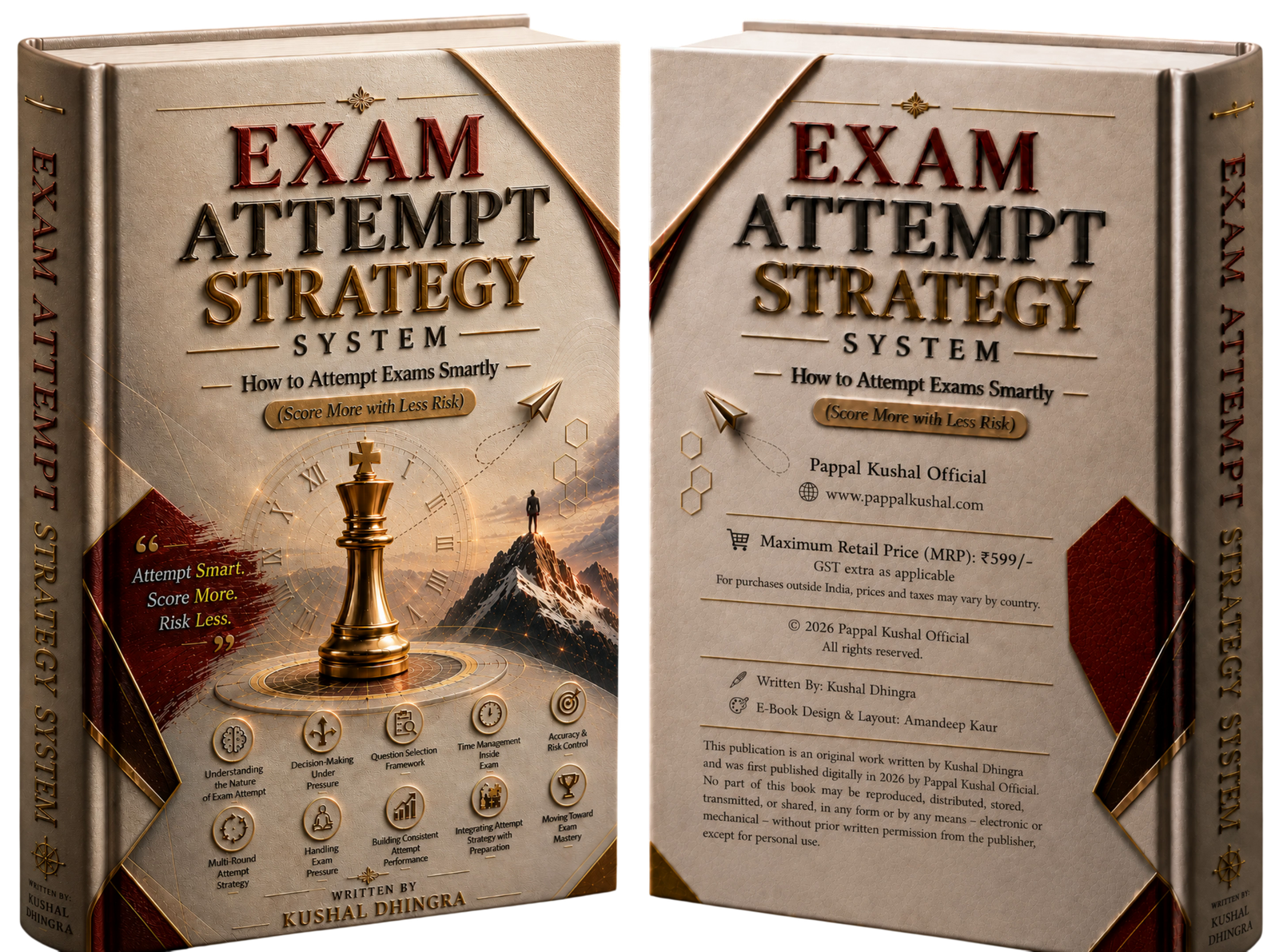
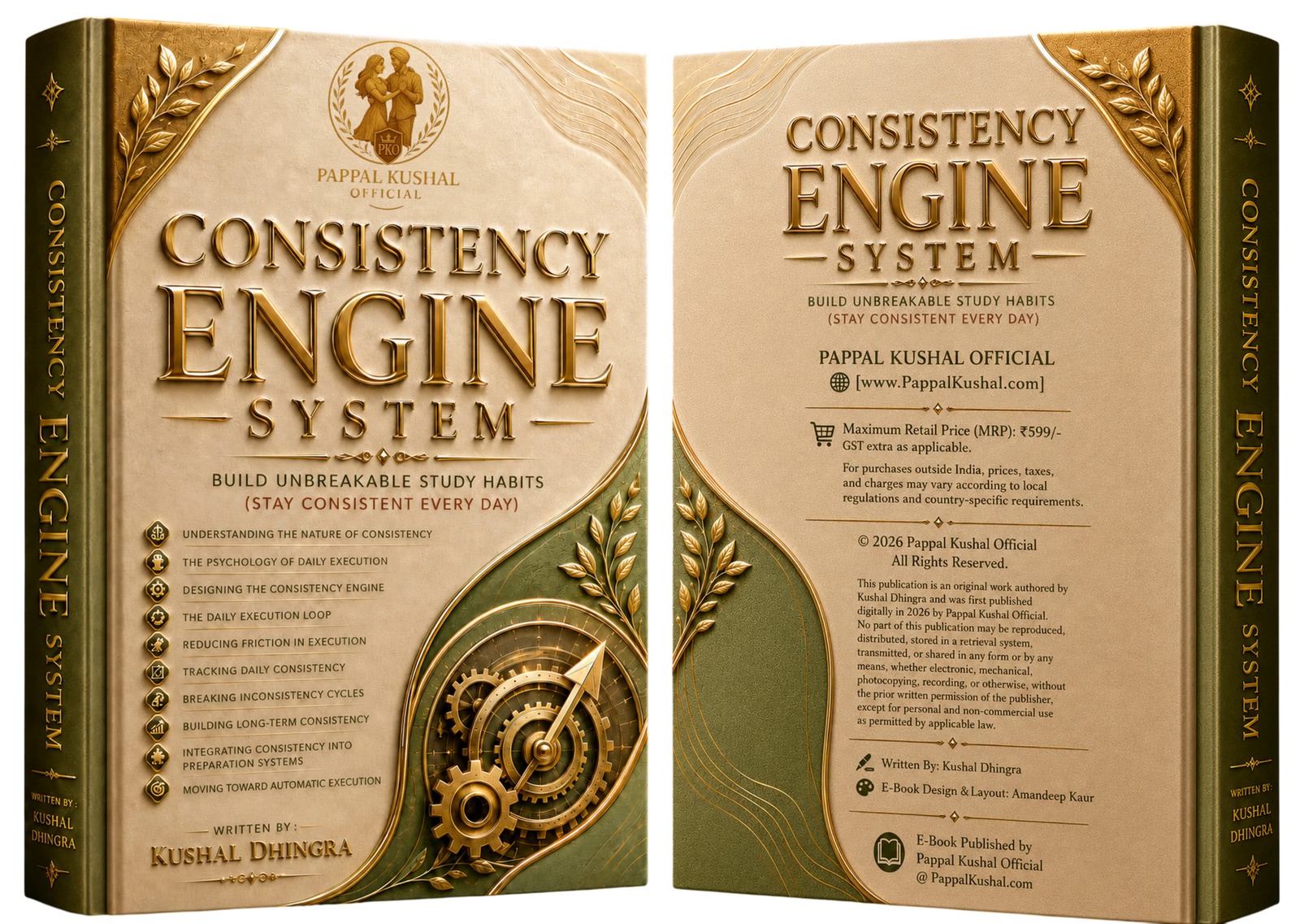
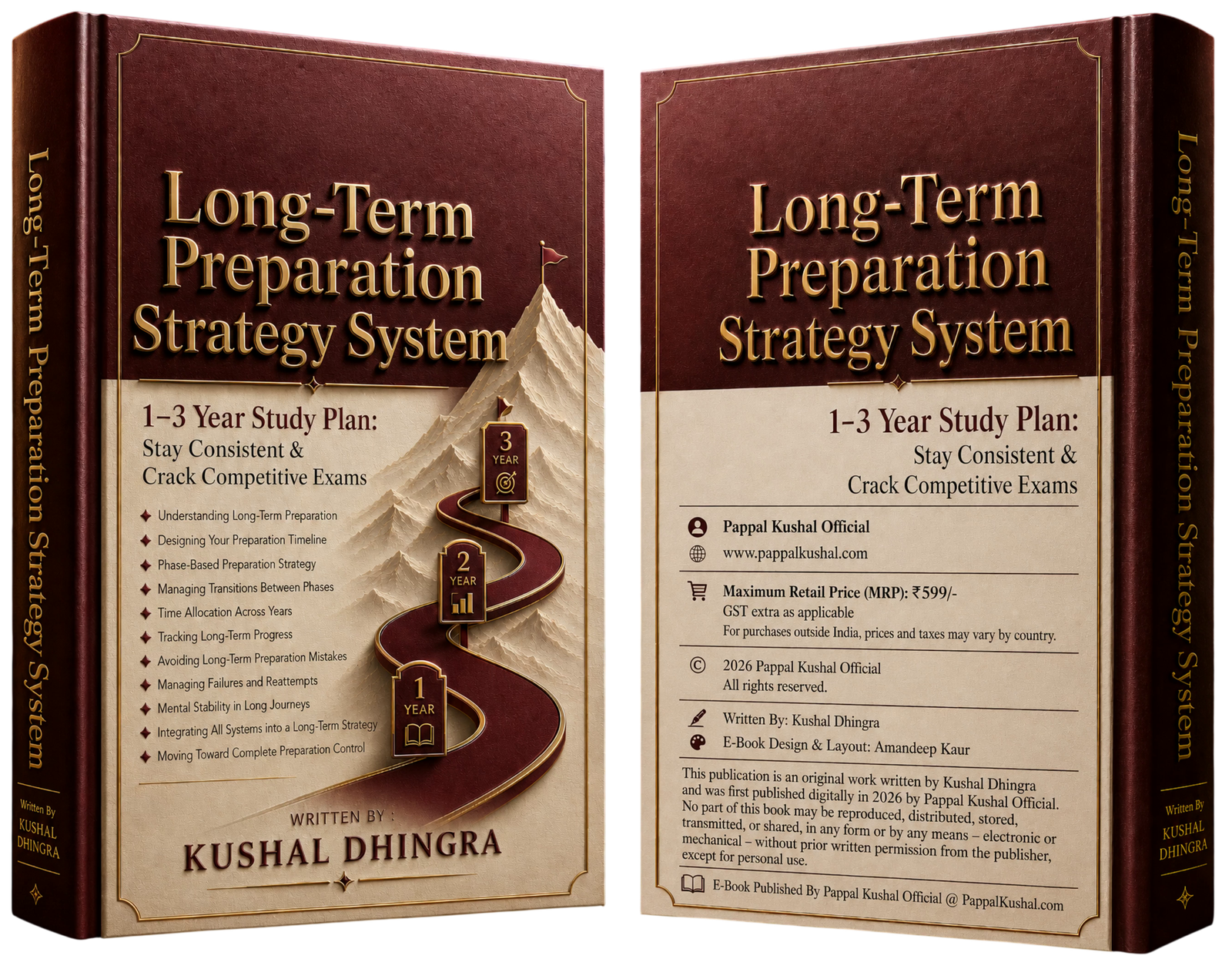
Exam Attempt Strategy System strengthens exam-hall decision-making itself by teaching how to attempt papers intelligently under pressure, control negative marking, recover lost time, manage difficult sections, and maximize marks strategically instead of emotionally. Consistency Engine System converts preparation from motivation-dependent effort into repeatable daily execution systems that continue even during low-energy periods or long preparation cycles. Finally, Long-Term Preparation Strategy System integrates all layers into a complete 1–3 year roadmap capable of supporting aspirants preparing through multiple phases, attempts, and extended competitive timelines.
This system helps railway aspirants establish a structured preparation architecture where every stage of study, revision, practice, and execution operates with clarity instead of randomness. It transforms scattered effort into an organized preparation system capable of sustaining measurable progress.

Many railway aspirants create plans but struggle to execute them consistently. This system bridges the gap between planning and measurable action by converting preparation into structured daily execution frameworks.
This framework organizes large railway examination syllabi into realistic daily, weekly, and long-term structures capable of balancing aptitude, reasoning, general awareness, revision, and practice efficiently without creating overload.
Railway preparation demands both speed and understanding. This system improves learning efficiency, memory retention, concept clarity, and processing ability so that preparation becomes faster and more performance-oriented.
This system directly targets railway exam performance by improving question-solving speed, accuracy under pressure, mock test analysis, error reduction, time management, and score optimization systems.
This exam-focused framework provides railway-specific preparation systems for RRB examinations including subject prioritization, practice integration, performance improvement cycles, and operational exam strategy models.
This system strengthens real exam-hall execution by improving question selection, time allocation, layered attempt strategy, negative marking control, and performance stability under pressure.
This framework converts preparation into repeatable daily execution systems where discipline operates automatically instead of depending on temporary emotional motivation or inconsistent intensity.
This system integrates planning, execution, consistency, speed development, revision, mock testing, and long-term strategy into a unified roadmap capable of supporting sustained railway preparation across multiple attempts and long timelines.
Each of these systems has been designed to solve a specific failure point repeatedly seen in railway preparation journeys. Individually, they improve isolated areas. However, railway preparation itself does not function in isolated segments. Planning affects execution. Execution affects speed. Speed affects confidence. Mock performance affects emotional stability. Consistency affects long-term retention. Exam strategy affects final marks even when preparation quality is high. This interconnected structure is exactly why fragmented preparation systems often produce incomplete results despite sincere effort.
When these systems are integrated together, preparation gradually transforms from scattered studying into operational performance training. Weaknesses become measurable. Practice becomes strategic. Revision becomes structured. Mock testing becomes analytical instead of emotional. Consistency becomes sustainable. Performance becomes more stable under pressure. Aspirants who recognize this structural gap early usually avoid months or even years of repeated mistakes, unstable strategies, and unnecessary preparation cycles.
The complete structured Railway Preparation Framework can be accessed here →
/railways/premium-guides/
PRICING STRUCTURE & VALUE POSITIONING
When evaluated independently, every system within this Railway Preparation Bundle carries its own operational depth, structured frameworks, and implementation architecture.
After Standard 20% Individual Discount:
When purchased individually, the combined value of these systems exceeds ₹3,500.
COMPLETE BUNDLE ACCESS
Instead of assembling fragmented systems individually, the complete integrated Railway Preparation Bundle is offered at:

However, railway preparation itself does not happen in isolated parts. Purchasing systems separately often creates performance gaps where one layer improves temporarily while another remains weak. An aspirant may improve speed but still fail in strategy. May improve planning but remain inconsistent. May attempt mocks continuously without improving accuracy. This fragmentation is one of the biggest hidden reasons why preparation remains unstable despite hard work.
SYSTEM COMPARISON (CRITICAL DECISION VIEW)
Approach | Experience | Result |
Free Content + Random Strategy | Scattered preparation, conflicting strategies, repeated mistakes, unstable mock performance | No reliable performance consistency |
Single Book Purchase | Improvement in one isolated area only | Partial clarity but incomplete railway preparation structure |
Complete Railway System Bundle | Fully integrated railway preparation architecture with planning, speed systems, execution, mock frameworks, and exam strategy | Consistent execution, measurable improvement, stronger exam performance |
The Railway Bundle is therefore not simply a discounted collection of PDF guides. It is a complete restructuring of railway preparation into a unified operational framework designed specifically for speed-oriented and performance-driven competitive examinations.
COMPLETE BUNDLE ACCESS
Instead of assembling fragmented systems individually, the complete integrated Railway Preparation Bundle is offered at:
This is not a reduction in content quality or system depth. It is a strategic restructuring of access designed to make the complete railway preparation ecosystem available as one integrated operational framework rather than disconnected preparation layers.
At some stage, continuing preparation without structure becomes more expensive than investing in clarity itself. Most railway aspirants do not fail because they lack effort. They fail because preparation slowly becomes unstable under pressure. Mock performance fluctuates continuously. Execution weakens over time. Speed improves without accuracy. Accuracy improves without sufficient attempts. Planning becomes disconnected from performance. Over time, months disappear inside repeated preparation cycles that never fully convert hard work into stable competitive readiness.
The systems included within this framework have been designed through observation of real railway preparation failures repeatedly seen across aspirants—where execution breaks, where speed training remains incomplete, where mock testing becomes ineffective, where consistency collapses, and where preparation loses operational direction despite sincere effort. Each guide directly addresses these breakdown points and converts preparation into a measurable performance system instead of an emotional or random process.
This bundle is designed for serious aspirants who understand that railway examinations are not simply about studying harder. They are about performing better inside a structured competitive system where speed, accuracy, discipline, strategy, and consistency operate together.
The value of a preparation system is not measured by how much information it contains. It is measured by how effectively it transforms effort into measurable performance. The real risk at this stage is not investing in structure. The real risk is continuing without it.